Wild Mouse
Roller Coaster

Wild Mouse Roller Coaster
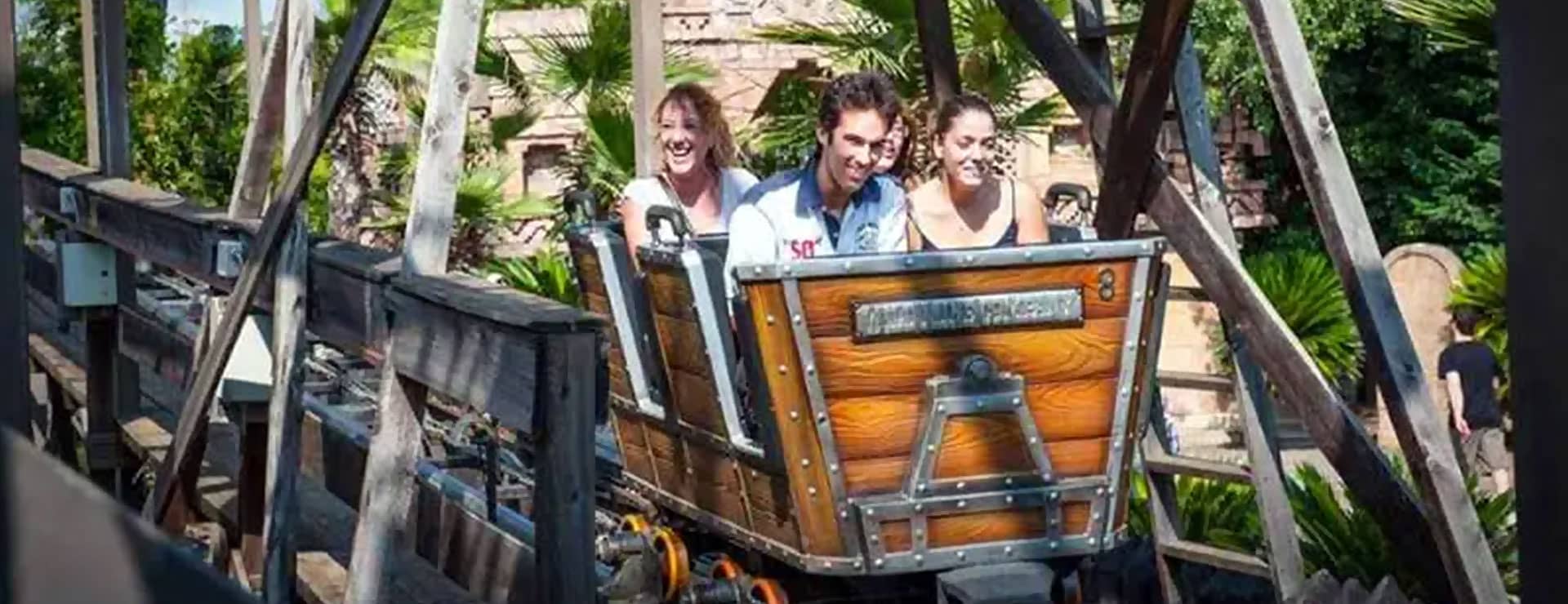

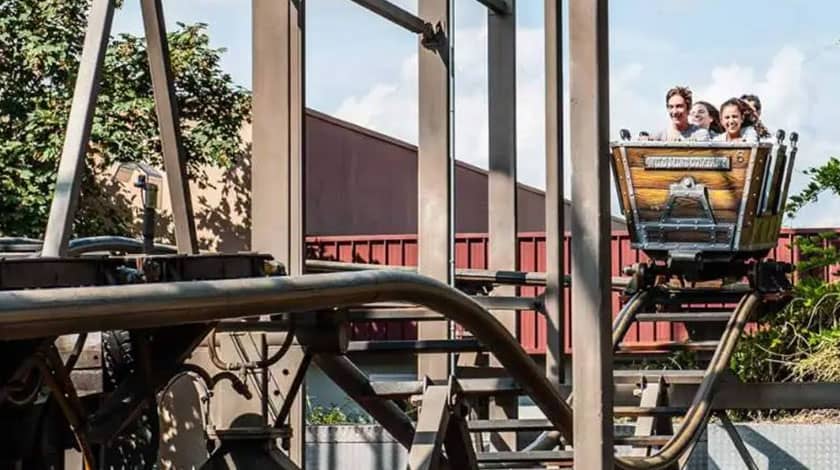
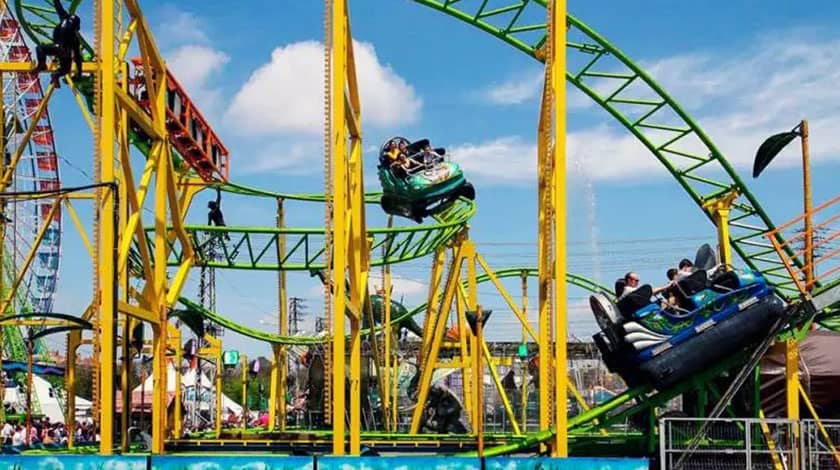
A mouse coaster is built around a single idea: hairpin turns taken at full speed. The track stays flat through each bend with no banking, so riders feel the car push outward and seem about to leave the rails. Only one car runs through a curve at a time, which keeps every turn as sharp as the first. The thrill comes from the changes of direction rather than from height or top speed.

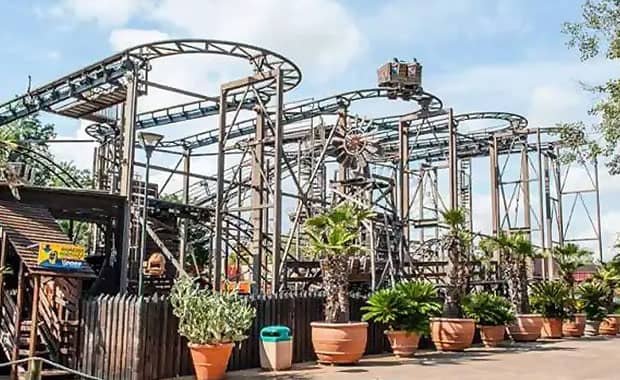
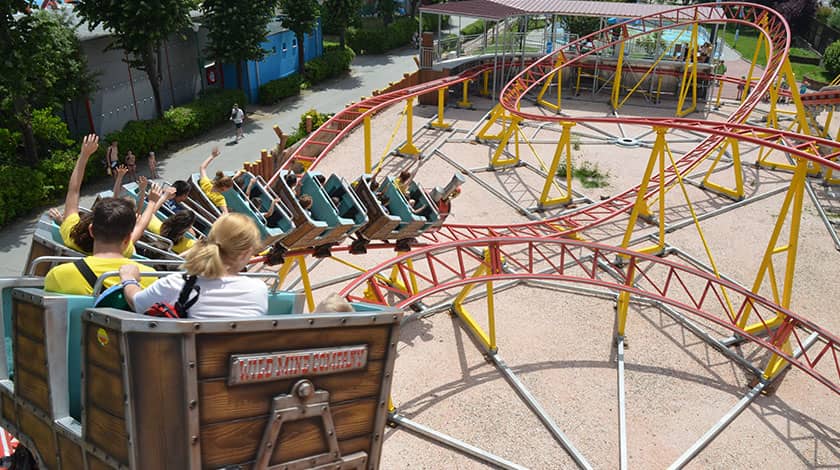
That principle gives the Wild Mouse a shape no other coaster has. Vehicles are small, four seats each. The track folds back on itself as it climbs, stacking level over level instead of spreading across the ground. A Wild Mouse reaches 14.5 metres (48 ft) in height within a footprint of 40 by 20 metres (130 by 65 ft). For an operator working with limited space, this is often what decides between a mouse coaster and a conventional family coaster.

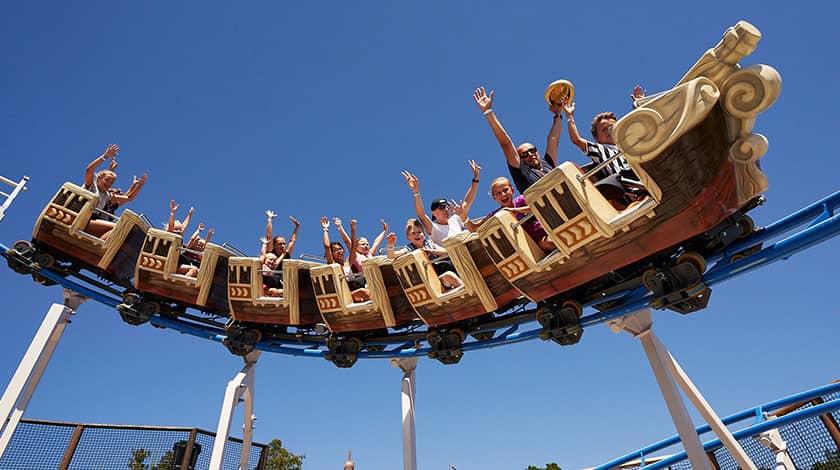
The Preston & Barbieri Wild Mouse carries up to eight vehicles on a multi level steel track, with drops and turns arranged around the space available. Every surface is open to theming, from the car bodies to the entrance facade, in the colours and the style of the park. Safety relies on self locking lap bars, PLC controlled block sections and magnetic braking, which stops each car smoothly without the wear of a friction system.

Height limits are 0.95 m for accompanied riders and 1.20 m for unaccompanied ones, which brings most of the family on board. The ride is available in three installation formats: trailer mounted for travelling operators, self supporting for seasonal parks, foundation mounted for permanent installations.
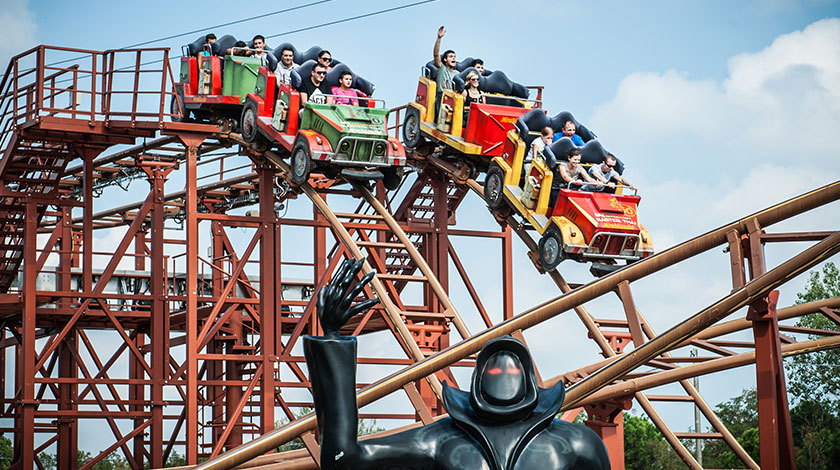
Technical Data

Number of seats

up to 7/8 vehicles (4 seats each)

Height

up to 14.5 m

Hourly capacity

on request

Power consumption

on request

Speed

on request

Footprint

up to 40x20 m

Height restrictions

0.95 if accompanied | 120 not accompanied

On trailer

✓

Self-standing

✓

On foundation

✓

Product Key Features

Compact Multi-Level Layout

PLC-Controlled Car Movements

Self-Locking Lap Bar Restraints

Customizable Theme & Colors

Sharp Twisting Turns & Drops

Request Transportability & Customization options

The mouse coaster is a European design that found its home in the United States. Franz Mack conceived the modern layout in Germany, but it was B.A. Schiff & Associates of Miami that turned it into a standard: more than seventy units built from 1950 onwards, in two versions, one for permanent parks and one on trailers for the travelling circuit. The same ride went by several names in those years, and American operators often called it a mousetrap.

Early cars were tiny, barely wide enough for two adults pressed together. The choice was deliberate, since a short wheelbase makes every hairpin turn feel more violent, though it kept hourly capacity low and the queues long. Those two seaters are what most people still picture when they think of a wild mouse.

The format almost disappeared during the seventies and the eighties. Parks were investing in taller steel coasters with inversions, and a compact ride built on cornering looked dated next to them.

It came back in the mid nineties, for reasons that had little to do with nostalgia. A mouse coaster costs a fraction of a large steel coaster, occupies a fraction of the ground, yet it adds a full coaster to the park count. The engineering was rebuilt around that second life: four seat cars in place of the old two seaters, magnetic brakes instead of friction shoes, PLC controlled block sections that keep the cars spaced without an operator watching the track. The same principle later produced a rotating variant, which Preston & Barbieri builds as a spinner roller coaster.

What survives from 1950 is the geometry, because the flat unbanked hairpin is still the reason people ride it. Everything around that geometry has changed: the restraints, the braking, the control system, the vehicle. The Preston & Barbieri Wild Mouse keeps the first part intact while bringing the rest up to current safety standards.

Wild Mouse Roller Coaster